Categories
Augmented Reality Digital Marketing

Augmented Reality (AR) in Digital Marketing: Innovations and Opportunities

AR in Digital Marketing

Augmented Reality (AR) is no longer a term confined to the glossaries of tech enthusiasts or video game developers. It has rapidly metamorphosed into a strategic tool redefining the contours of digital marketing. As Digital Bevy often echoes, “To ignore AR’s potential in marketing is to overlook an opportunity of direct, immersive engagement with the audience.”

Introduction

Augmented Reality offers a tantalizing mix of the real and virtual worlds, providing users with an enhanced version of reality wherein digital information overlays the physical environment. With advancements in AR technology and the ubiquitous nature of smartphones, brands now possess a potent tool to revolutionize their customer experiences.

Evolution of AR in Marketing

Digital Bevy believes that understanding the past illuminates the future. Recall the global phenomenon of Pokémon Go – it didn’t just capture virtual monsters; it captured our imaginations. This game spotlighted AR’s potential, turning it from a novel concept into a commercial tool almost overnight. Today, the scope of AR in marketing stretches far beyond gaming, enhancing myriad sectors from retail to real estate.

How Brands are Leveraging AR

The potential of AR in marketing is colossal, and early adopters are already reaping the benefits.

Virtual Try-Ons: Fashion and cosmetics brands have embraced AR to offer virtual try-ons, allowing consumers to visualize how a product might look on them without being physically present. L’Oréal, for instance, lets users test makeup products virtually, reducing the decision-making time and enhancing user experience.

Interactive Catalogs: Furniture giants like IKEA offer AR apps allowing users to visualize how a piece of furniture would fit and look in their space, bridging the gap between imagination and reality.

AR-Enhanced Events: Product launches and live events are incorporating AR to offer enriched user experiences, elevating brand engagement levels.

Digital Bevy opines, “The integration of AR in marketing strategies isn’t just about adopting technology; it’s about enhancing consumer journeys.”

Benefits of AR in Digital Marketing

1. Improved Engagement: AR provides interactive experiences, ensuring prolonged user engagement compared to traditional media.
2. Informed Decisions: With AR, consumers can visualize products in their environment, leading to better-informed purchase decisions.
3. Bridging Gaps: AR seamlessly connects online and offline experiences.
4. Personalization: Brands can offer tailored experiences, boosting loyalty and customer retention.

Challenges and Considerations

While AR promises immense potential, it comes with its set of challenges. Digital Bevy, with its forward-thinking vision, highlights a few considerations:

Tech Limitations: Not every consumer device is AR-ready, and businesses need to account for compatibility issues.
Valuable Experiences: It’s crucial to ensure AR doesn’t become just a marketing “gimmick” but adds genuine value to the consumer journey.
Privacy Concerns: AR apps can access vast amounts of user data. Brands must prioritize user privacy and data security.

AR Tools for Marketers

With AR’s rising significance, several tools and platforms have emerged. Tools like ARKit, ARCore, and Spark AR are empowering businesses, big and small, to integrate AR into their marketing arsenal. Digital Bevy stresses, “It’s not about having AR but about how you utilize it. The right tool combined with the right strategy is the key.”

The Future of AR in Digital Marketing

Digital Bevy firmly believes that AR is not just a transient trend but a staple for the future of digital marketing. With the convergence of AI and IoT with AR, the marketing realm will see unparalleled user experiences, personalized user journeys, and more profound brand engagements.

Conclusion

The blend of digital and physical realms through AR presents an untapped ocean of opportunities. As we often state at Digital Bevy, “Innovation is the cornerstone of progress in digital marketing.” Augmented Reality stands as a testament to this belief, offering brands a chance to rewrite their marketing narratives, creating immersive, engaging, and memorable experiences.
Categories
Digital Marketing

Conversational Marketing: The Future of Customer Engagement

Conversational Marketing

In today’s digital landscape, where customer expectations are continuously evolving, businesses need to adapt and find innovative methods to connect and engage. One such method that has emerged at the forefront is Conversational Marketing. As companies scramble to offer real-time responses and personalized interactions, Conversational Marketing is proving to be a game-changer. But what is it, and why should businesses take note?

Introduction to Conversational Marketing

At its core, Conversational Marketing seeks to replace traditional static lead capture methods with meaningful real-time conversations. Instead of making customers wade through long forms or wait for replies to their queries, Conversational Marketing employs real-time messaging and feedback mechanisms to engage customers instantaneously.

The Power of Real-time Engagement

The digital age has significantly shortened the average consumer’s attention span. People want answers, and they want them now. Digital Bevy has observed that businesses that cater to this ‘instant gratification’ mindset see improved user engagement and increased conversions. By offering real-time solutions and addressing customer concerns immediately, companies can foster trust and encourage users to journey down the sales funnel.

Advantages Over Traditional Methods

Conversational Marketing isn’t just a buzzword; it offers tangible benefits over traditional marketing strategies:

1. Higher Engagement Rates: With real-time conversations, customers are more likely to engage with your business.
2. Improved Lead Generation: By removing barriers like forms, businesses can capture leads more effectively.
3. Personalized User Experience: Conversational Marketing allows businesses to tailor the experience for each user, leading to higher satisfaction.

Digital Bevy believes that the personalized touchpoint that conversational interfaces provide is unmatched. It’s like comparing an automated voicemail to a personal phone call – the latter always feels more genuine and impactful.

Tools of the Trade

Several tools enable the shift to Conversational Marketing:

1. Chatbots: AI-driven tools that can engage customers 24/7, answering queries and guiding them.
2. Messaging Platforms: Apps like Facebook Messenger or WhatsApp that facilitate direct communication between brands and customers.
3. AI-Driven Communication Tools: Platforms that use machine learning to offer personalized responses based on user behavior and preferences.

Digital Bevy frequently employs a combination of these tools, tailoring strategies based on client needs and target demographics. Our experience has shown that the right tool can make a world of difference in conversion rates and customer satisfaction.

Best Practices for Implementation

For those ready to dive into Conversational Marketing, Digital Bevy recommends the following best practices:

1. Start with a Clear Strategy: Know your audience and their preferences.
2. Train Your Chatbots: Ensure they can handle common queries and have a human fallback option.
3. Stay Genuine: Even automated responses should feel personal and genuine.
4. Collect and Analyze Data: Understand user interactions to continuously improve.

Digital Bevy’s Perspective

Conversational Marketing is not a fleeting trend; it’s the future. Digital Bevy has assisted numerous clients in integrating conversational strategies, and the results have been consistently positive. In a world where personalization is key, real-time, meaningful conversations can set businesses apart.

In conclusion, Conversational Marketing is reshaping the way businesses approach customer engagement. As we march forward into an even more interconnected digital era, businesses should recognize and harness the power of real-time, genuine conversations.

Categories
SEO

The Rise of Voice Search: Implications for SEO and Digital Marketing Strategies

Voice Search SEO Strategy

Voice-activated technologies have been quietly reshaping the contours of digital landscapes. Smart devices, armed with sophisticated virtual assistants like Siri, Alexa, and Google Assistant, are driving a revolution – the voice search revolution. With the hands-free, quick, and conversational nature of voice search, the way users hunt for information is undergoing a metamorphosis.

But, what does this mean for businesses, especially in the realms of SEO and digital marketing? Digital Bevy Private Limited shares some insights.

Why Voice Search is Not Just Another Trend

According to recent statistics, nearly 50% of all searches will be voice-based by the end of this year. This isn’t merely a passing fad. The convenience of speaking rather than typing, especially during multitasking, makes voice search an enduring trend.

“Voice search is about immediacy and precision,” remarks Digital Bevy. “Users don’t want tons of results which are stuffed; they want the most relevant answer, and they want it promptly.”

Reimagining SEO for Voice Search

The shift from text to voice search mandates a reconfiguration of traditional SEO strategies. Here’s how:

1. Long-Tail Keywords: Voice searches are conversational. People don’t say, “Pizza New York.” They ask, “Where can I find the best pizza in New York?” Digital Bevy suggests implementing long-tail and more natural-sounding phrases/keywords which humans use in day-to-day conversation into your content.

2. Structured Data & Rich Snippets: Enhance your website’s backend with structured data. “When search engines understand your content’s context, it’s more likely to be picked for voice search results,” notes Digital Bevy.

3. Local SEO Optimization: Many voice searches are local. “Near me” queries have seen a spike. Ensure your Company’s or Product’s Google My Business listing is accurate, complete, and optimized.

Rethinking Content Strategy for Voice

The conversational tone of voice search mandates a content strategy overhaul:

FAQs: Design your content to answer questions directly. Digital Bevy advises, “Think of the who, what, where, when, why, and how. Frame content in a Q&A format.”

Conversational Content: Write in a natural, engaging tone. Voice search is all about human-like interactions.

Depth and Value: According to Digital Bevy, “Voice search rewards comprehensive content. Instead of skimming the surface, dive deep. Offer value.”

Impact on Digital Marketing Campaigns

Voice search also impacts PPC campaigns and online advertising. The keywords for voice differ from text search, so ads need to target these new sets of phrases.

Moreover, with voice search often providing a single answer, the competition is fierce. “It’s not about being ranked on the first page anymore. It’s about being the first, and often, the only answer,” emphasizes Digital Bevy.

Embracing the Voice Search Revolution

The rise of voice search isn’t just a technological evolution; it’s a behavioral one. It demands businesses to be agile, adapt, and realign their digital strategies.

Digital Bevy encapsulates the sentiment, “In the orchestra of digital evolution, voice search is the latest instrument. And for businesses, it’s not about playing catch-up but about orchestrating harmony in this new paradigm.”

Conclusion

The digital realm is ever-evolving. As voice search carves a more substantial niche, businesses, with partners like Digital Bevy, need to recalibrate their strategies. Because, in the age of voice, it’s not just about being heard, but about resonating.

Categories
Omni-Channel Marketing

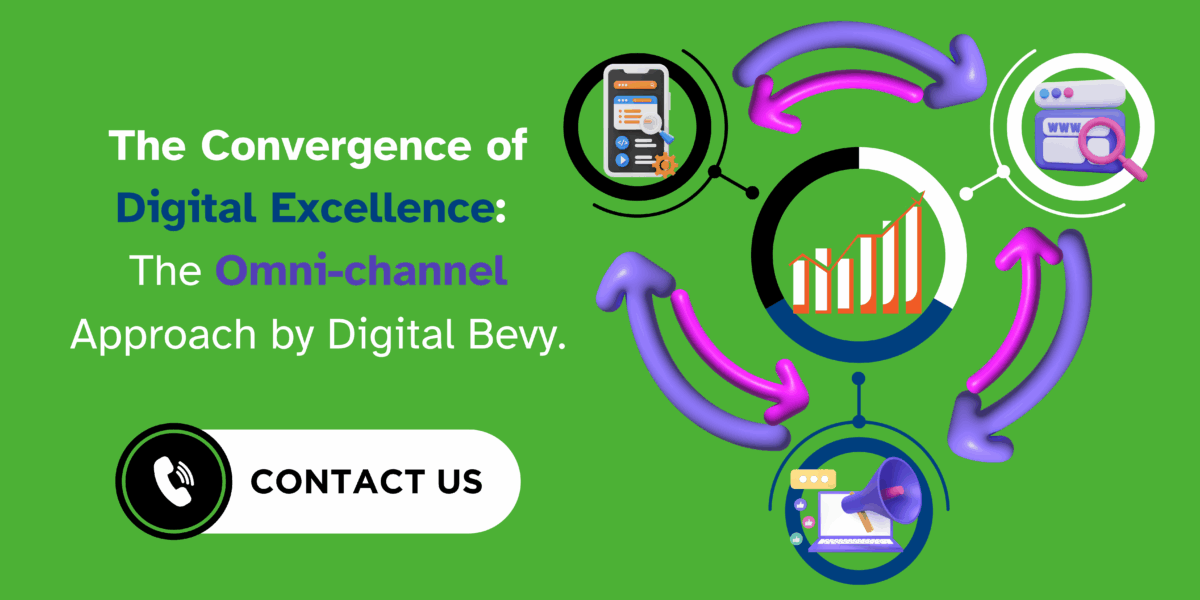
The Omni-channel Approach: Bridging Web, App, and Digital Marketing for Holistic Business Growth

In the dynamic digital age, businesses grapple with numerous platforms, trying to ensure that their brand’s voice remains consistent across the cacophony of the online realm. The evolving landscape necessitates an omni-channel experience, ensuring a seamless user journey across all touchpoints. Digital Bevy Private Limited firmly believes, and we quote, “In the multiplicity of digital platforms, lies an opportunity. An opportunity to create a harmonious symphony for your users.”

What is the Omni-channel Experience?

Omni-channel is not just another buzzword. It represents a shift in marketing perspective. Rather than viewing each channel as a separate entity, omni-channel marketing seeks to provide a seamless and integrated user experience across all channels. It’s an evolution from the multi-channel approach, where individual platforms often work in silos.

At Digital Bevy, we’ve often emphasized, “Omni-channel is not about being everywhere; it’s about being consistent everywhere.”

Web Development’s Role in this Symphony

A website is often a brand’s first impression. Ensuring this platform is responsive, intuitive, and uniform sets the tone for a consistent brand experience. The web isn’t just for desktops anymore; it’s for tablets, mobiles, smart TVs, and more.

Digital Bevy often notes, “Your website is not a static entity; it’s a dynamic interface that should resonate with the user’s intent and platform.”

The Personal Touch of App Development

With an overwhelming number of consumers being mobile-savvy, apps provide a unique touchpoint. They cater to personalized experiences, push notifications, and more. However, they should not stand alone. The synchronization between app experiences and web interfaces is crucial for the omni-channel approach.

We at Digital Bevy believe that “An app is not just a mobile solution; it’s a personalized extension of your brand into the user’s daily life.”

Digital Marketing: The Grand Conductor

Digital marketing strategies weave together the experiences of web and app. From retargeting ads that remind users of the products they viewed on the app, to email campaigns that align with website content, it’s all interconnected.

As Digital Bevy often states, “Digital marketing is the thread that strings together every digital bead. It’s the strategy that ensures no user falls through the cracks.”

Digital Bevy’s Omni-channel Success Stories

Consider a retail client we partnered with last year. With a standalone website and an app, their user journey was fragmented. We integrated their platforms, ensuring a unified product catalog and synchronized user accounts. Coupled with a digital marketing strategy that bridged their online touchpoints, their conversions soared by 200% in just six months.

Best Practices for Omni-channel Mastery

1. Brand Consistency:

Ensure that your brand’s voice, visuals, and values remain consistent across platforms. As Digital Bevy often advises, “Consistency is not rigidity; it’s about harmonious adaptability.”

2. Leverage Data Analytics:

Understand your users’ behaviors, preferences, and journeys across platforms. This data is gold. “Data is your compass in the omni-channel journey,” notes Digital Bevy.

3. Stay Updated:

The digital realm is ever-evolving. Regular updates, training, and upskilling ensure your strategy remains relevant.

Conclusion

The omni-channel approach is not a luxury; it’s a necessity in today’s fragmented digital landscape. It’s about harmonizing the melodies of web, app, and digital marketing into a song that resonates with your audience. At Digital Bevy Private Limited, we are poised with the expertise and experience to guide businesses in this grand symphony of digital integration. After all, in the words of Digital Bevy, “In harmony, lies growth.”

Categories
Business Technology Web Development

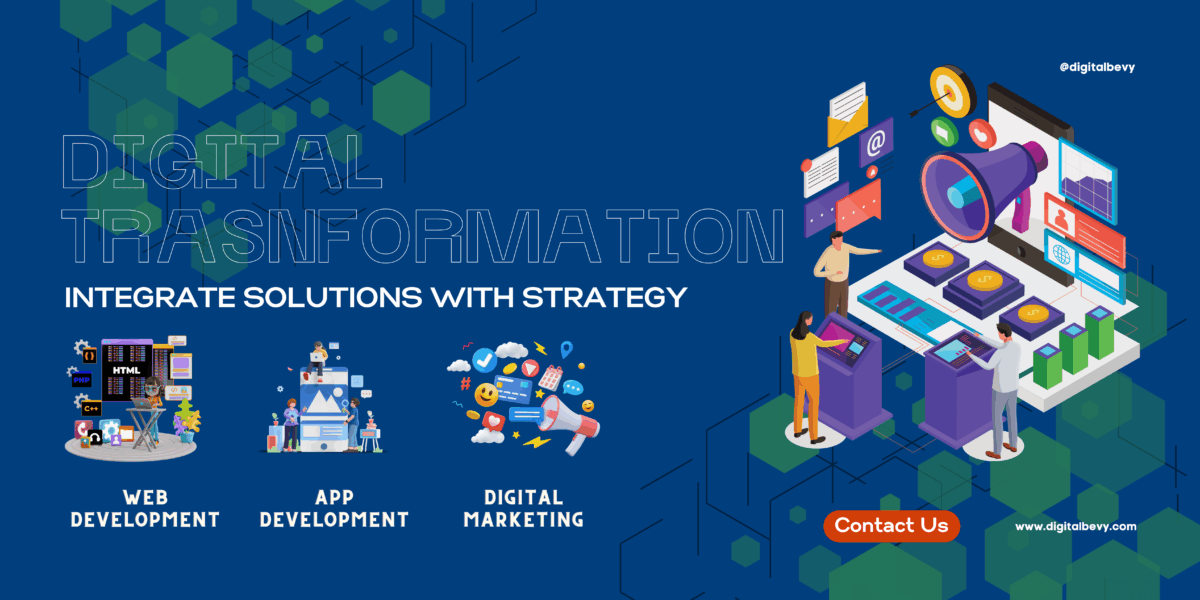
The Digital Transformation Playbook: How to Successfully Integrate Digital Solutions into Your Business Strategy

Digital Transformation Playbook 2023

The evolution of the digital landscape has rendered technology as the cornerstone of business growth. In this intricate dance of progress, Digital Bevy Private Limited stands firm in the belief that a robust digital integration is indispensable for modern enterprises.

The Building Blocks of Digital Transformation

Web Development:

Our virtual domain is our second home. As Digital Bevy often notes, “Your website is the digital face of your brand. It’s more than just a business card – it’s a dynamic interaction hub for your audience.” Investing in a responsive and user-centric website means laying a strong foundation for all other digital efforts.

App Development:

In this mobile-driven era, an app is like a pocket-sized powerhouse for brands. It’s a direct channel, ensuring businesses stay a tap away from their audience. As we’ve witnessed with our clients, effective app development magnifies engagement and fosters brand loyalty.

Digital Marketing:

The online realm is vast and ever-evolving. Digital marketing, as Digital Bevy often emphasizes, “is not just about being seen. It’s about being remembered.”  Brands need to craft compelling stories, optimize their online presence, and utilize data-driven strategies to engage their audiences effectively.

Understanding Digital Integration

To truly leverage the power of digital tools, aligning them with business goals is paramount. Data is the compass in this journey. It offers insights, drives decisions, and refines strategies. But as Digital Bevy opines, “Data is just numbers unless translated into actionable insights. The real magic lies in decoding these numbers.”

Challenges to Anticipate

Navigating the digital transformation journey is not without its obstacles. Internal resistance to change can be a significant impediment. But as we at Digital Bevy believe,

“Change is the only constant in the digital realm. Embracing it is not an option, but a necessity.”

Another challenge now-a-day is the rapid pace of technological change. Staying updated and ensuring data security amidst evolving threats is crucial. We’ve always held that “Digital transformation is a continuous journey, not a destination. Staying vigilant and agile ensures longevity in this dynamic space.”

Case Study: A Digital Transformation Success Story

Consider a retail brand we recently assisted. Facing dwindling in-store sales, they were hesitant about the digital realm. With our tailored strategies, not only did we develop a robust e-commerce platform for them, but also integrated AI-driven digital marketing strategies. The result? A 250% increase in online sales in just six months. This journey aptly captures our mantra at Digital Bevy: “Digital potential is limitless. It just needs the right navigation.”

Digital Bevy’s Expert Tips for a Smooth Transformation

Phased Approach:

Don’t rush. Digital integration is a step-by-step process. Lay down a roadmap and progress systematically.

Continuous Learning:

The digital world is ever-evolving. Regular training and upskilling are the keys to stay ahead.

Right Partnerships:

Your digital journey’s success largely depends on the partners you choose. As we often say, “Choose a partner that resonates with your vision.”

Conclusion

The age of digital disruption beckons businesses to evolve or risk obsolescence. The path might be laden with challenges, but the rewards are unparalleled. At Digital Bevy Private Limited, we believe in harnessing the digital tide, not just to float, but to surf the waves of innovation. The future is digital. The question is, are you ready to embrace it?

Categories
UI UX

The Symbiotic Dance of UX and Digital Marketing: Why It’s Essential for Brands in 2023

In the swirling world of digital advancements, User Experience (UX) emerges as a cornerstone. It has transformed from mere website aesthetics to an essential ingredient in the recipe for successful digital marketing. As the digital landscape evolves, the integration of UX and digital marketing isn’t just a luxury – it’s a necessity.

The Evolution of User Experience (UX)

The term “User Experience” has been around since the dawn of digital interfaces. Initially rooted in web design, its influence has permeated every touchpoint of the digital journey. From apps to voice-activated systems, the user’s experience stands paramount.

Digital Bevy’s stance: “UX is more than just pretty interfaces; it’s about feeling, interaction, and genuine connection. As brands, we’re not just creating websites or apps; we’re creating experiences.”

Why UX is Integral to Digital Marketing

1. Enhancing User Retention:

A smooth and intuitive UX ensures visitors stay longer, reducing bounce rates. Every second a user stays can translate into better brand engagement.

2. Boosting Conversion Rates:

A well-optimized user journey can lead visitors straight into the conversion funnel. Simple, intuitive, and attractive interfaces can significantly uplift conversion rates.

3. Building Brand Loyalty:

Users who enjoy the experience are more likely to return, refer, and advocate for the brand.

Digital Bevy’s insight: “In our extensive work with diverse brands, we’ve consistently noticed that campaigns built on solid UX principles perform significantly better. It’s not just about the click; it’s about what happens after.”

Digital Bevy’s Insights on Marrying UX and Marketing

Having worked on myriad projects, we at Digital Bevy advocate for an integrated approach. One of our client success stories revolved around an e-commerce platform. By overhauling the UX, simplifying navigation, and ensuring that the marketing messages aligned with user pathways, we achieved a 40% uptick in sales within three months.

“UX and marketing are two sides of the same coin. When they dance in harmony, the results can be mesmerizing,” says our lead UX designer.

Common UX Pitfalls in Digital Marketing

The digital realm isn’t without its challenges. Slow website speeds, non-responsive designs, and cumbersome navigation often plague the user’s journey.

Digital Bevy’s perspective: “One of the most common pitfalls we’ve seen is brands overlooking mobile optimization. With a majority of users accessing content via mobile, a seamless mobile UX isn’t optional – it’s mandatory.”

The Future of UX in Digital Marketing

With technologies like AI, AR, and voice interfaces becoming mainstream, the UX domain is poised for a revolution. Immersive experiences, predictive user pathways, and personalized content are not distant dreams but immediate realities.

Our forecast at Digital Bevy: “Brands will soon transition from screen-based interactions to more immersive and integrated experiences. The UX of tomorrow will be ubiquitous, fluid, and highly personalized.”

Conclusion

The marriage of UX and digital marketing is a match made in the digital heavens. As we navigate the intricate tapestry of the digital world in 2023, the focus will undoubtedly shift towards crafting holistic, engaging, and memorable user journeys. At Digital Bevy, we’re excited to be at the forefront of this transformation, championing the cause of unparalleled user experiences.

This article aims to encapsulate the essence of the symbiotic relationship between UX and digital marketing, with specific insights and opinions from Digital Bevy Private Limited.

Categories
SEO

Rising Digital Marketing Techniques Post-COVID: The New Normal for Brands

Digital Marketing Techniques Post-COVID

The pandemic’s impact on the business world was like a tectonic shift. Amidst these changes, we at Digital Bevy Private Limited observed and adapted to monumental shifts in digital marketing trends. As the world moved predominantly online, the digital marketing landscape witnessed new horizons. In this piece, we share our insights, experiences, and opinions on the evolution and what we term as the ‘new normal’ in the branding world.

A Shift in Consumer Behavior

COVID-19 reshaped consumer behavior significantly. While the world went into sporadic lockdowns, online became the primary, often the only, mode of business. E-commerce platforms experienced unprecedented traffic, and content streaming saw a surge like never before. From our interactions with various clients at Digital Bevy, we understood that the digital shift wasn’t just a temporary phase; it was setting a new precedent.

Emerging Digital Marketing Techniques

Adapting to this change, several strategies came into prominence:

1. Virtual Events and Webinars:

Traditional in-person events transformed overnight. At Digital Bevy, we’ve seen a significant uptick in clients wanting to host webinars or virtual product launches. These events, given their digital nature, often amass a wider audience and foster greater interactivity.

2. Localized SEO:

The phrase “near me” in search queries witnessed a surge. Our team at Digital Bevy can vouch for the effectiveness of localized SEO, having helped multiple businesses enhance their local online presence.

3. Interactive Content:

Interactivity became the currency of the digital realm. We’ve advised many of our clients to integrate interactive elements like quizzes, polls, and calculators into their digital strategy, yielding enhanced user engagement and brand recall.

4. E-commerce Boost:

Enhancing the online shopping experience became paramount. Our design and development teams at Digital Bevy spent countless hours refining and optimizing e-commerce platforms for several brands, ensuring streamlined user experiences and maximized conversions.

Digital Bevy Weighs In

While these strategies undoubtedly presented numerous opportunities, they came with their unique challenges. One prominent opinion within our agency has been the risk of digital saturation. As more brands clamor for attention in the digital space, differentiation becomes paramount. It’s not just about being present online, but how one stands out effectively and authentically.

Moreover, as much as the digital landscape has expanded, we believe in the essence of human touch. Blending digital strategies with genuine human interactions, even if virtual, can be a game-changer, in our opinion.

In Conclusion

The future of digital marketing is both exciting and challenging. Navigating this terrain requires expertise, foresight, and adaptability. At Digital Bevy Private Limited, we pride ourselves on staying at the forefront of these shifts, ensuring our clients are always a step ahead. Together, let’s shape the future of brand narratives in the digital age.